One-on-one Online Feldenkrais Sessions
Still dealing with pain or tension
that nothing seems to fix?
One-to-one online sessions for tension that keeps coming back, movement that feels harder than it should, or a body that has not felt like yours since an injury. You do not need to explain it perfectly. We start with what is hard in your day.
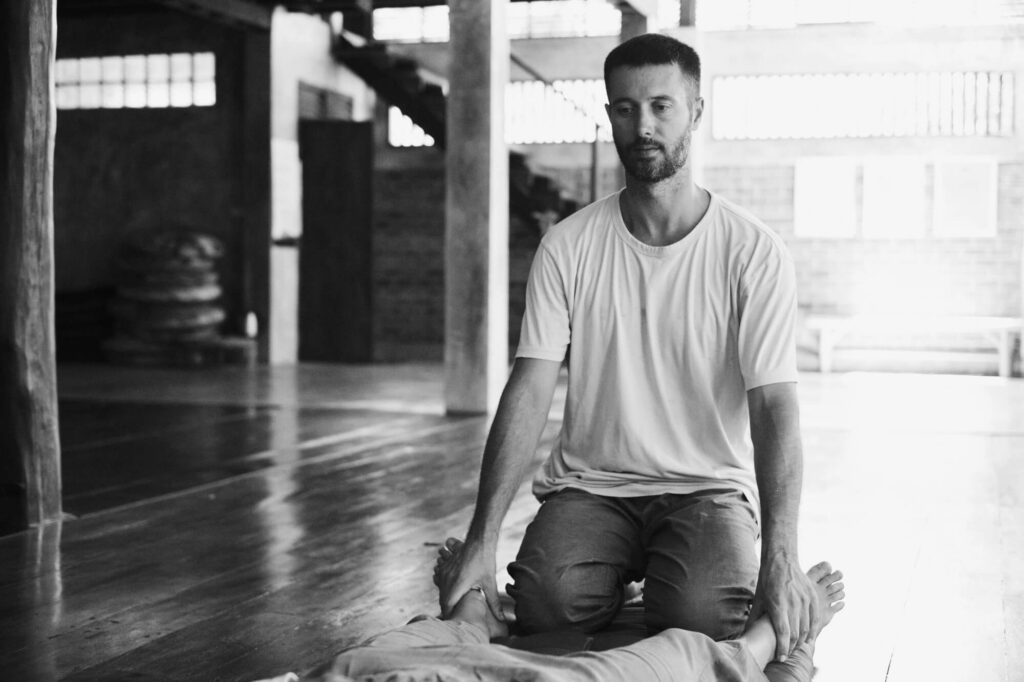
Where people usually start
Movement feels harder than it should
Reaching, turning, stepping or shifting your weight takes effort you cannot explain. One side may feel clumsy or foreign, and the stronger side keeps taking over.
Tension keeps coming back
Your jaw, neck, shoulders or back tighten again a day or two after a massage or a good stretch.
Stress lives in your body
You brace, hold your breath, struggle to settle, or spend most of the day in your head.
Many people come with more than one of these. One session can work with all of them.
You may have heard this already
- “Nothing is wrong. Your scans look fine.”
- “Just relax.”
- “Stretch more.”
- “You need to strengthen it.”
- “It is probably stress. It will pass.”
Some of this may have helped, at least for a while. Strengthening and good physiotherapy have their place, and I am happy to work alongside them. What often gets less attention is how your nervous system organizes the movement in the first place. If an exercise hurts, or the stronger side always takes over, the movement may need a different starting point.
And if you have tried to describe what you feel and nobody quite understood, that is a good place to begin. You do not need the right words. Finding them is part of the work.
Why an old pattern can stay after the reason is gone
After an injury, a long stressful period or years at a desk, your body learns to protect itself. It shifts weight to the other leg, holds the jaw, keeps one shoulder ready. At the time, that is a smart response.
Often the protection stays after the reason is gone, because your nervous system keeps using the best solution it knows. What was learned can be relearned. When your nervous system finds a new way to organize a movement, ease and strength can build on it.
This is also how the Feldenkrais Method began. Moshe Feldenkrais had a serious knee injury from football, and the surgery he was offered had uncertain results. He chose to study how he actually moved, and slowly taught himself to walk well again.
What happens in a session

Each session is 60 minutes on Zoom and follows what you bring that day.
- You tell me what is hard. Reaching for a glass, turning to look behind you while driving, a knee you do not trust on the stairs, a jaw that aches by evening. A few words are enough.
- I watch how you do it. On camera, I look at how your whole body organizes that one action, and I ask what you notice.
- We explore small variations. Lying on the floor, sitting or standing, I guide you with my voice through slow, small movements. All movements stay very small and very slow, far below any discomfort or stretch. If even a small movement is uncomfortable, you just imagine it.
- We check what changed. You try the action again and notice what is easier and what still takes effort. If feelings come up, there is room for them too.
- You take something home. One or two short explorations to practice before the next session.
Who this is for
Tension & pain
People dealing with chronic tension, recurring pain, or a tightness that has been there for years.
Told nothing is wrong
Doctors and physios found nothing serious, and your body still does not feel right. You want someone to take it seriously and look at how you move.
After an injury
The injury has healed, but the movement has not fully come back. Maybe you still favor one leg, or one side has felt clumsy since a sports injury from yoga, running, football or skiing.
Performers
People who depend on the quality of their movement (dancers, musicians, athletes, performers) and want a more refined, attentive way of working with their body.
Returning
People who have had Feldenkrais before and want to continue.
Curious
And people who are simply curious about what it means to move with more ease and less effort.
No prior experience with the Feldenkrais Method is necessary.
Why online works
The question I hear most: can it really work without touch? It can, and clients surprise themselves with how quickly they feel it. Feldenkrais works through the nervous system’s ability to learn. You take in new movement information, you compare it against old habits, something shifts. Attention and awareness do that work, and neither of them needs a massage table.
What clients notice
01
You integrate better.
After a session in a studio, most people drive or take public transport home. The learning is still happening in the body, but the body is also navigating traffic, social interaction, the street. When we work online, you finish the session and you stay. You rest where you are.
That window of quiet after a session is one of the most important times your nervous system has to consolidate what it just discovered.
02
You are already in your own environment.
Your home, your room, the place you know well. A familiar space makes the nervous system feel safe. And a nervous system that feels safe learns faster.
03
Chronic pain lives in context.
The way you sleep, the way you sit, the way you move around your own home. In a studio, none of that is visible. Here, we can work in the exact positions and situations where your pain actually shows up.
04
The hour is just the hour.
No travel, no parking, no effort to get here. When nothing stands between you and the session, you show up.
05
Location stops mattering.
Whether you are in Belgrade, Berlin, or Bangkok, we can work. The only logistics involved is coordinating time zones.
Session format and investment
Session
60 min
Where
Zoom
Sliding scale
€75 to €125
You will need a device with a camera (a laptop or tablet works well; a phone propped on a cushion is enough), a reasonably stable internet connection, enough floor space to lie down comfortably or a chair you can sit in freely, and comfortable clothing you can move in easily. No yoga mat or equipment is needed.
“Movement is life, life is a process. Improve the quality of the process, and you improve the quality of life itself.”
Dr. Moshe Feldenkrais
The method
What the Feldenkrais Method is and how it works
Dr. Moshe Feldenkrais was a physicist, mechanical engineer, and judo black belt. He began developing his method in the 1940s, drawing from neuroscience, developmental psychology, biomechanics, and the study of how humans learn to move. He was writing about the brain’s capacity to rewire itself decades before that idea entered mainstream science.
The method has two forms:
Awareness Through Movement uses verbally guided movement sequences, usually in a group setting.
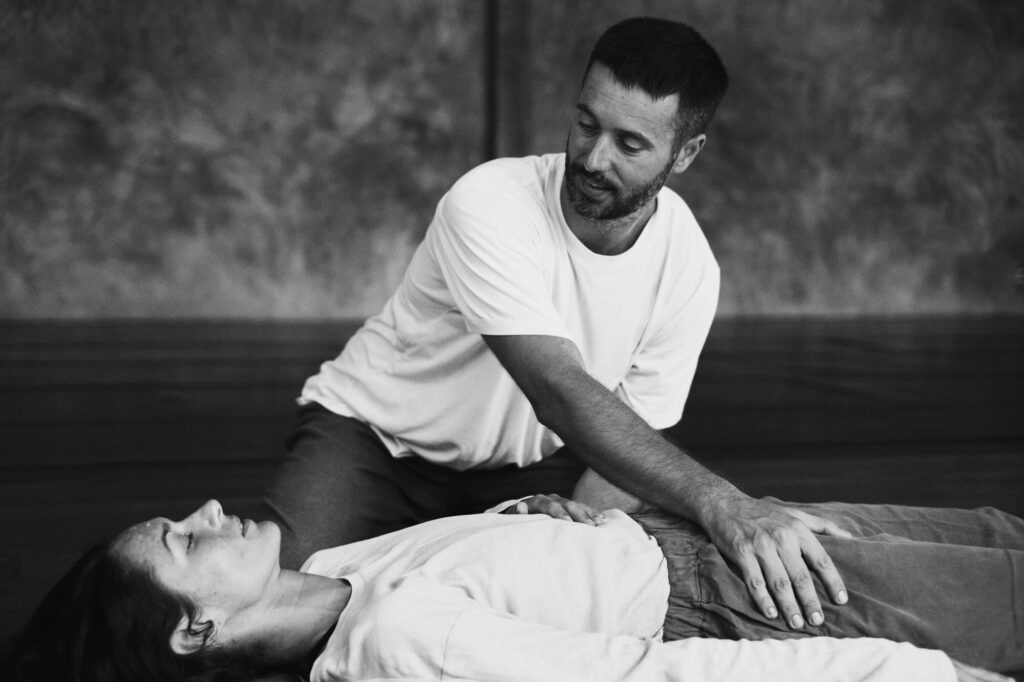
Functional Integration is the hands-on, one-on-one form of the method. Traditionally, the practitioner works through touch, moving the client’s body directly. In these online sessions, I do the same work through voice and observation instead of hands.
A hands-on Feldenkrais session is a lesson for your nervous system, given through touch and movement. No manipulation of tissue, no adjustment of bones, no correcting the body toward some ideal shape.
A Feldenkrais session slows things down enough that old habits become visible again. When the brain finds an easier option, it reorganizes movement with less effort and less strain.
Track record
A method with a long track record
For more than 75 years, the Feldenkrais Method has been used by physiotherapists, rehabilitation centers, musicians, dancers, actors and athletes. Yehudi Menuhin studied with Moshe Feldenkrais, and Peter Brook brought him in to teach his actors. Today more than 7,000 certified practitioners teach the method in 21 countries, after a four-year, 800-hour training.
Its effects have been studied in clinical research, including randomized trials and systematic reviews on back and neck pain, balance and Parkinson’s disease, and new studies appear every year.
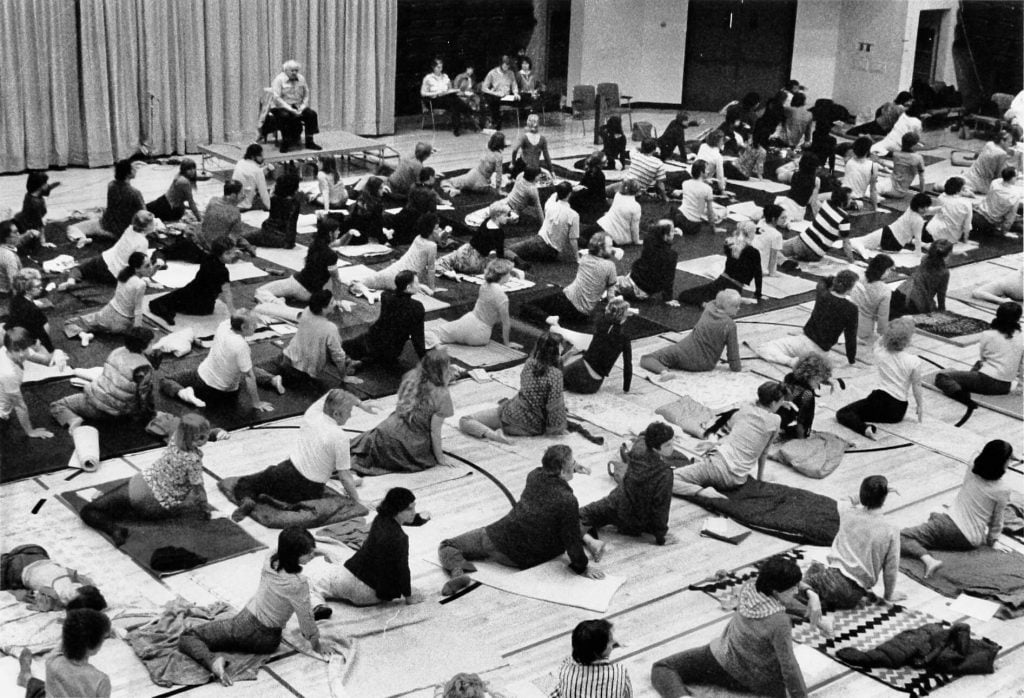
Most people who come to me have already tried massage, stretching, physiotherapy, yoga or therapy. Feldenkrais works one level earlier, with the way you sense and coordinate each movement. That is why so many people find their way here after everything else.
About Nikola
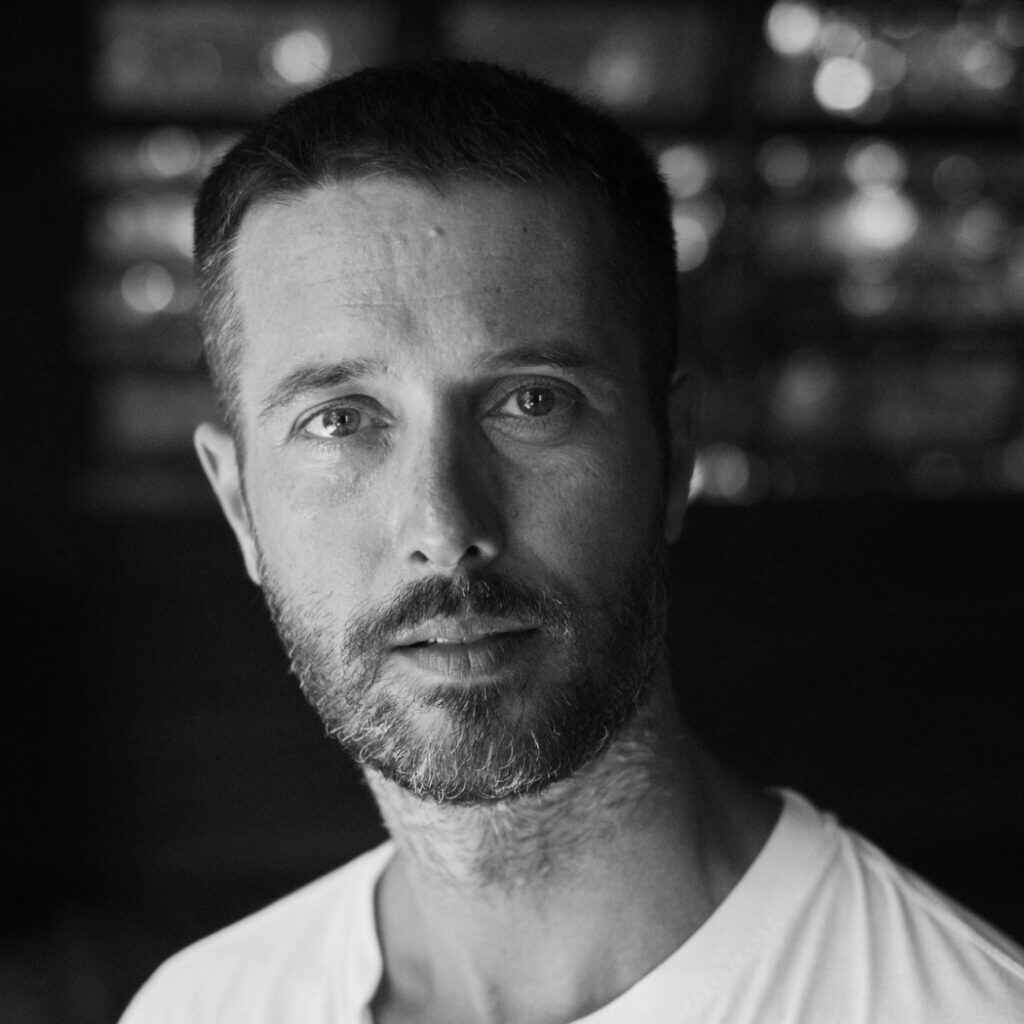
I am a somatic practitioner, a certified Feldenkrais Method teacher, and the founder of Native State.
I work with your body as a living, intelligent process.
In practice, this means I listen deeply to how your system organizes itself. We start with the thing you came for. Then we look at how the rest of you organizes around it, because a knee, a jaw or a shoulder always moves together with your ribs, pelvis, eyes and breath. Together we discover where new possibilities can begin to emerge.
In one session we can work with movement and with what comes up emotionally, following whatever your body brings. Some people want only the movement side, some want mostly conversation. You decide, and it can change from week to week.
My work draws on the Feldenkrais Method, NeuroAffective Touch, craniosacral biodynamics, Aletheia Coaching, parts work, and presence-based inquiry.
You can read more about my background and training.
Common questions
Can Feldenkrais work online, without touch?
Yes. The method works through your nervous system’s ability to learn, and attention does that work just as well over a camera.
What is Functional Integration?
Functional Integration is the one-on-one form of the Feldenkrais Method. Traditionally the practitioner works through touch. In online sessions I do the same work through voice and observation.
How long is a session, and what does it cost?
Each session is 60 minutes on Zoom, on a sliding scale of €75 to €125. We start with a free 20-minute call to see whether working together feels right.
What do I need for an online session?
A device with a camera (a laptop or tablet works well; a phone propped on a cushion is enough), a reasonably stable internet connection, enough floor space to lie down or a chair you can sit in freely, and comfortable clothing. No mat or equipment is needed.
Do I need experience with the Feldenkrais Method?
No prior experience is necessary. I guide you step by step, and you can adapt or skip any movement.
Do you also teach group classes online?
Yes, from time to time. Feldenkrais online classes (Awareness Through Movement) run as short series on Zoom, announced first on my email list and WhatsApp group.
Can I come with chronic pain or an injury?
Usually yes. We move well within what feels comfortable, and movements should not cause or increase pain. If you have an acute injury, recent surgery or a specific medical condition, check with your doctor first and tell me before we begin.
What if I cannot explain what is wrong?
That is fine. Many people start with “I know this sounds strange, but…”. We begin with one ordinary action that feels hard, and the words usually come as we work.
Do I have to talk about emotions?
No. Some sessions are mostly movement, some include conversation about what comes up. You decide, and you can change your mind at any point.
Ready to begin?
Book a free 20-minute discovery call on Zoom.
We talk about what you are working with, I answer any questions you have, and together we sense whether working this way feels right for you.
Stay connected
Get notified about upcoming classes and offerings.
Join the quiet WhatsApp group for occasional announcements, or follow along on Instagram.